Water in Compressed Air or High Dew Point: Causes and Troubleshooting
Water in compressed air is commonly related to aftercooling, receiver drainage, dryer capacity, automatic drains, ambient conditions or downstream pipe cooling. Measure pressure dew point and inspect the system section by section to locate where moisture appears.
· BOSAN
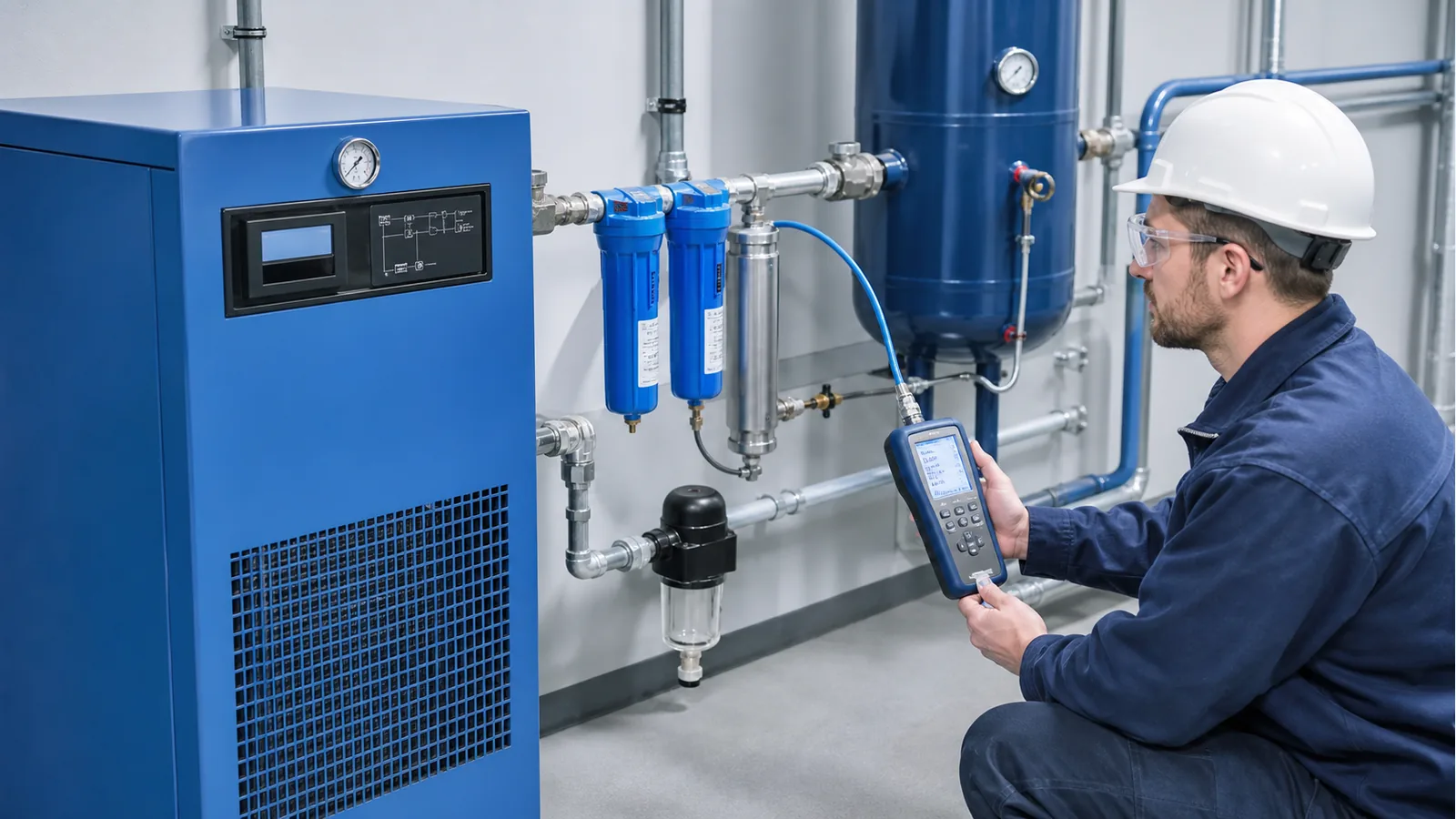
Air heats during compression and water vapor condenses as it cools. A large amount of condensate does not automatically mean that the dryer has failed. The key questions are where liquid appears and whether actual pressure dew point meets the process requirement. One drain observation cannot determine system performance.
Typical Symptoms
- Large quantities of liquid water discharge from the receiver, line filters or production point.
- A refrigerated dryer reports high dew point, a desiccant dryer outlet dew point rises, or the reading fluctuates excessively.
- Pneumatic valves corrode, paint develops water defects, product becomes damp or outdoor piping freezes in winter.
- Automatic drains do not discharge, leak air continuously or receive backpressure from shared drain lines.
Diagnostic Sequence
- Identify whether water appears before/after the aftercooler, at the receiver, before/after the dryer or at the remote point of use. Record ambient temperature, dryer inlet temperature, flow and pressure.
- Check aftercooler heat-transfer performance and the water separator. Confirm that compressed air is cooled as designed and bulk condensate is removed before the dryer.
- Inspect automatic drains and drain piping at receivers, filters and dryers. Clear restrictions and ensure that separate drains cannot pressurize or backflow into one another.
- Compare dryer rated flow with actual maximum flow and apply correction factors for inlet temperature, ambient temperature and working pressure. Operation beyond rating significantly reduces drying capacity.
- For refrigerated dryers inspect refrigeration, heat exchangers, fan and freeze protection; for desiccant dryers inspect switching valves, purge air, silencers, desiccant and dew-point sensor. Refrigerant work requires qualified service personnel.
- Measure pressure dew point with a calibrated instrument of suitable range. Liquid water or oil contamination can make a sensor inaccurate.
- Check whether downstream piping passes through an area colder than the dryer outlet. Cooling below the pressure dew point causes renewed condensation even when the dryer outlet is normal.
Corrective Actions
- Restore aftercooling and water separation and provide reliable automatic drainage at receivers and filters.
- Clean or repair the refrigerated dryer or resize it for actual conditions; use an appropriate desiccant system where a lower dew point is required.
- Replace exhausted desiccant, restricted filters and failed drains and calibrate the dew-point sensor.
- Insulate or heat-trace cold piping and maintain a pressure dew point below the lowest expected pipe temperature with an appropriate margin.
Stop the Compressor and Call a Qualified Technician When
- Liquid water reaches a process where product quality or safety is affected.
- Outdoor piping, drains or a refrigerated dryer is blocked by ice.
- Refrigerant leaks, a compressor overheats, or pressure-containing and drain components require dismantling.
Prevention
- Trend dryer inlet conditions, outlet pressure dew point and drain operation.
- Recalculate aftercooling, storage, filtration and drying capacity when production expands.
- Test automatic drains regularly and dispose of oily condensate according to environmental requirements.
- Set target pressure dew point from the lowest pipe temperature expected throughout the year.
Important Note
Atmospheric dew point and pressure dew point are not the same value. Procurement, acceptance and diagnosis must state measurement pressure, temperature, flow and dew-point basis.