Low Air Compressor Pressure or Air Delivery: Complete Diagnostic Guide
Low discharge pressure or insufficient air delivery may result from demand exceeding capacity, air leaks, blocked filters, an inlet valve that does not fully open, high separator differential pressure, a minimum-pressure valve fault or an inaccurate pressure sensor. First separate compressor problems from system problems.
· BOSAN
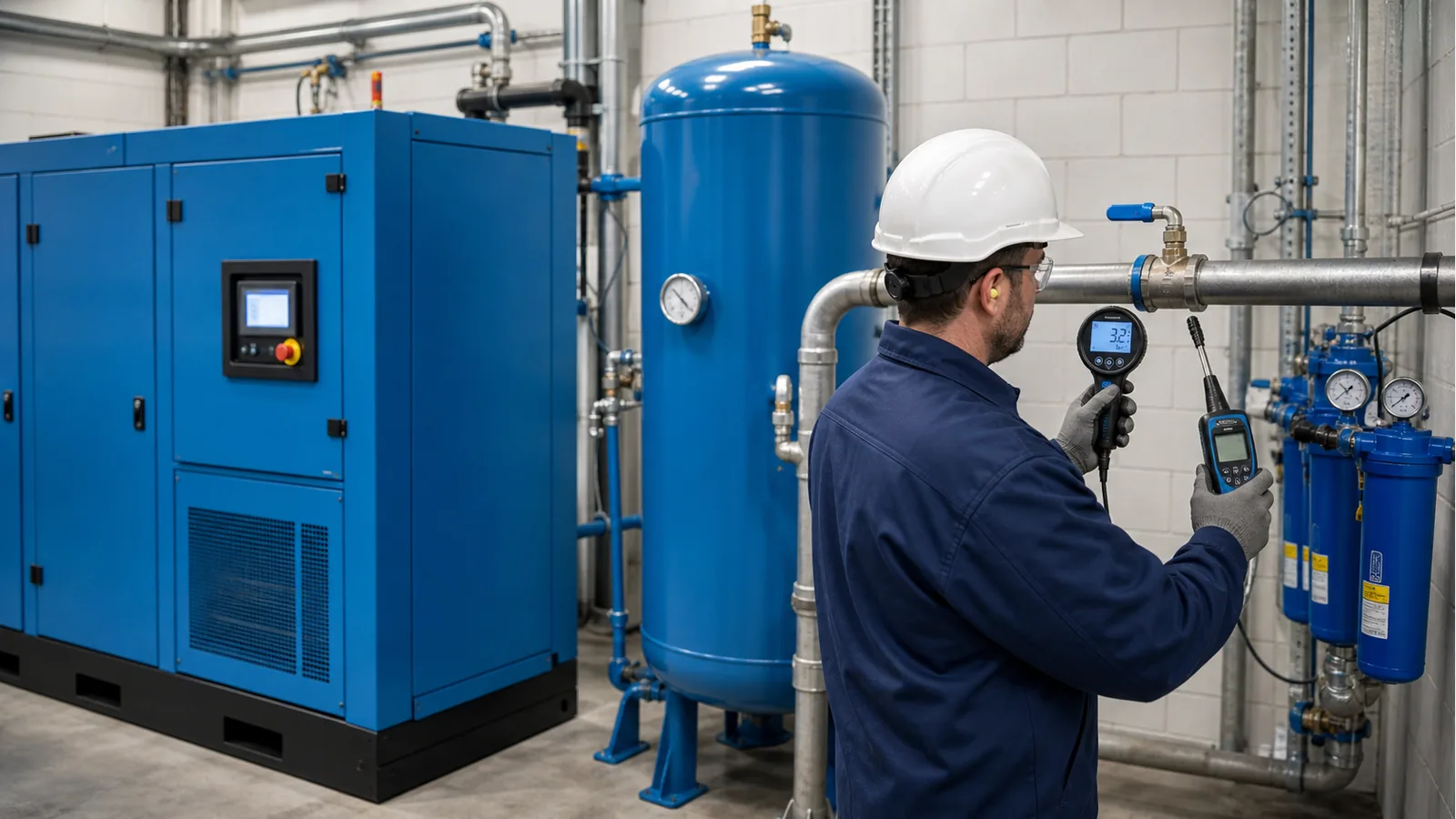
Low pressure does not always mean that compressor capacity has fallen. Simultaneous demand, leaks, treatment pressure drop and inadequate storage can all reduce point-of-use pressure. Record pressure at the compressor discharge, main header and most remote user at the same time.
Typical Symptoms
- The compressor remains fully loaded but system pressure cannot reach the setpoint.
- Compressor discharge pressure is normal while pressure at the production line is low.
- Pressure falls rapidly when pneumatic equipment starts and recovers when the equipment stops.
- Air intake appears restricted, separator differential pressure is high, leaks are audible or a filter differential-pressure alarm is active.
Diagnostic Sequence
- Confirm pressure units, setpoints and sensor readings. Compare compressor discharge and receiver pressure with a calibrated gauge.
- Calculate the actual simultaneous airflow demand and identify recently added machines, extra shifts or high-flow intermittent consumers.
- Perform a pressure-decay or ultrasonic leak survey during non-production. Inspect hoses, couplings, drains, valves, flanges and buried piping.
- Inspect the inlet filter and inlet valve for restriction. Verify that the inlet valve reaches the fully open position after a load command.
- Read pressure before and after the air/oil separator or use the controller differential-pressure value. A restricted separator can create high internal pressure but low external delivery.
- Check the minimum-pressure valve, check valve, safety valve and control-air tubing for leakage or sticking.
- Measure pressure before and after line filters, the dryer and long pipe sections to determine whether treatment equipment or undersized piping is responsible.
Corrective Actions
- Repair leaks, eliminate inappropriate open blowing and recalculate compressor and receiver capacity from measured demand.
- Replace inlet, separator and line-filter elements that have reached differential-pressure or service limits.
- Repair the inlet valve, solenoid valve, control-air tubing, minimum-pressure valve and inaccurate pressure sensor as required.
- For excessive distribution loss, remove unnecessary pressure margin and optimize header size, ring-main design and air-treatment selection instead of simply raising compressor pressure.
Stop the Compressor and Call a Qualified Technician When
- Internal pressure is excessive, separator differential pressure exceeds its limit, or the safety valve operates.
- The inlet valve, minimum-pressure valve or separator system must be dismantled.
- Air delivery drops suddenly together with abnormal air-end noise, temperature or current.
Prevention
- Establish and trend normal flow, pressure and differential-pressure values.
- Run a scheduled leak-detection program instead of compensating for leaks with higher pressure.
- Recalculate peak flow, storage and treatment capacity before production expansion.
- Monitor differential pressure across critical filters and dryers.
Important Note
Nameplate capacity is stated at defined pressure and test conditions. Field comparison requires consistent pressure, temperature and measurement references; receiver fill time alone is not a reliable air-end performance test.