Air Compressor Frequent Loading and Unloading: Short-Cycling Diagnosis
Rapid load/unload short cycling increases energy use and valve wear. Common causes include an oversized compressor, insufficient receiver volume, air leaks, a pressure band that is too narrow, poor sensor location or restricted filters.
· BOSAN
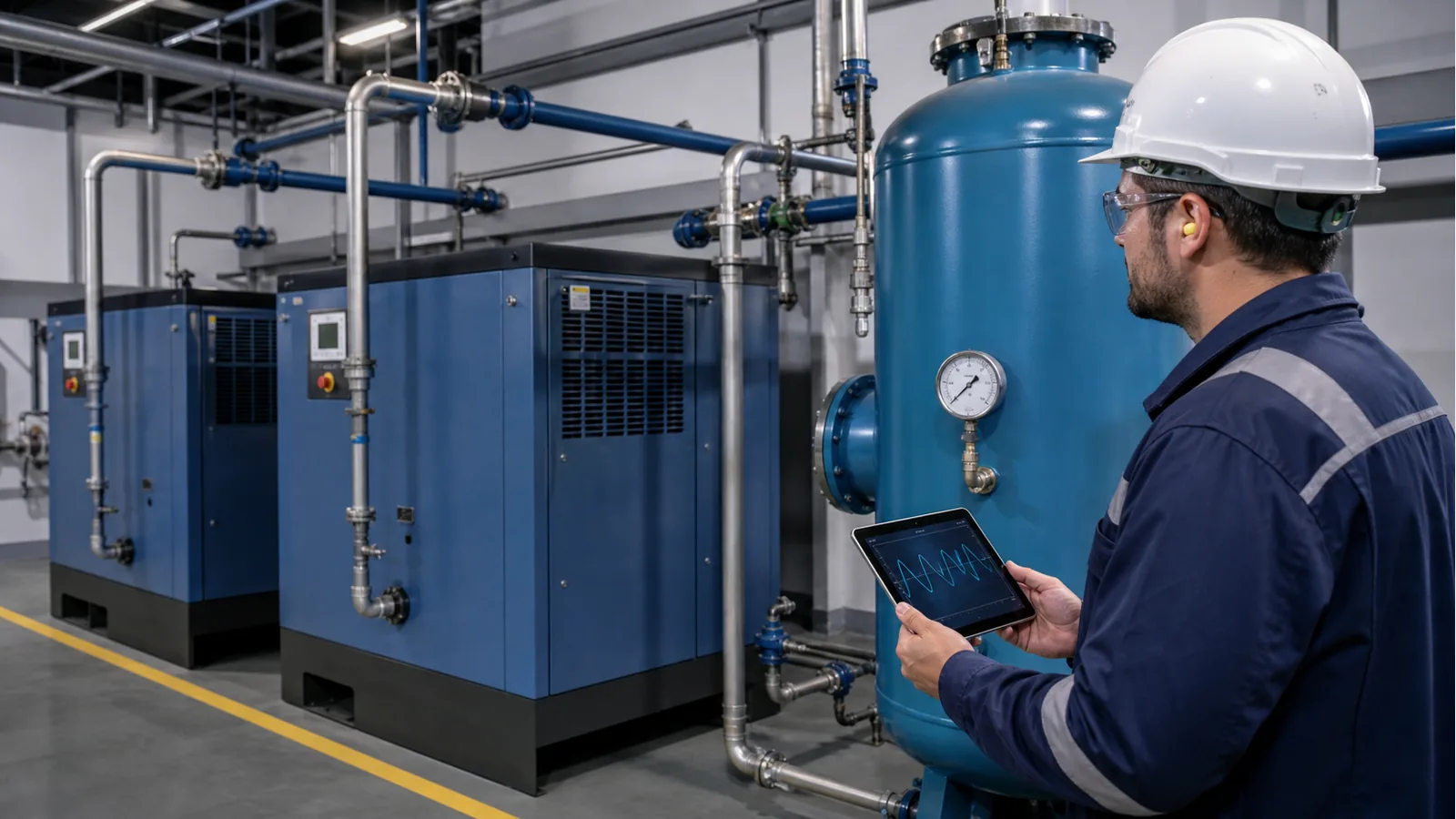
A fixed-speed screw compressor normally alternates between load and unload pressure, but repeated transitions within short intervals usually indicate inadequate buffering, fluctuating demand, leakage or poor control settings. Measure the cycle before changing pressure.
Typical Symptoms
- Pressure rapidly oscillates between upper and lower limits and the inlet and solenoid valves operate repeatedly.
- The motor starts and stops frequently, or the compressor spends long periods unloaded while still consuming power.
- Pressure falls sharply when a user starts and reaches unload pressure shortly after the user stops.
- Valve actuation and contactor operations become more frequent, increasing energy consumption and component wear.
Diagnostic Sequence
- Record load time, unload time, pressure and flow across at least one complete production cycle to separate normal demand variation from abnormal short cycling.
- Compare rated compressor delivery with average and peak demand. A substantially oversized compressor fills the system too quickly.
- Check effective receiver volume, connection size and location. Insufficient storage cannot buffer short demand changes.
- Survey the air network for leakage, paying particular attention to automatic drains, quick couplings and permanently open blowing points.
- Verify that the load/unload pressure band is not excessively narrow and that the pressure sensor is not exposed to pulsation or localized pressure drop.
- Check differential pressure across inlet and line filters and the dryer. Restriction may create misleading pressure changes.
- Inspect inlet, solenoid, blowdown and check valves for delayed response or leakage. In multi-compressor systems, verify sequencing logic.
Corrective Actions
- Repair leaks and eliminate unnecessary open blowing to smooth actual demand.
- Provide receiver volume and connection size based on measured demand; do not rely solely on higher storage pressure.
- Optimize the pressure band within process limits and calibrate the pressure sensor.
- For persistently variable demand, evaluate VSD control, central sequencing or a base-load plus trim-compressor arrangement.
Stop the Compressor and Call a Qualified Technician When
- Start frequency exceeds the motor/starter allowance and overload or overheating occurs.
- Internal pressure does not blow down correctly or severe loading impact occurs.
- Pressure becomes uncontrolled, exceeds the setpoint or operates the safety valve.
Prevention
- Evaluate average flow, peak flow and rate of demand change during compressor selection.
- Maintain adequate storage and drain and inspect pressure vessels as required.
- Use flow meters and controller trends to monitor load patterns.
- Apply central sequencing in multi-compressor rooms to prevent units from competing for pressure.
Important Note
Permitted load/unload and start/stop frequency varies by model. Pressure band, minimum run time and stop delay must be adjusted only in accordance with the manufacturer's control instructions.