Air Compressor Abnormal Noise or Vibration: Diagnostic Guide
When an air compressor develops impact, rubbing, squealing or increased vibration, identify the source before checking mounts, isolators, piping strain, fan, belts or coupling, motor bearings and air end. Stop immediately for severe metallic noise.
· BOSAN
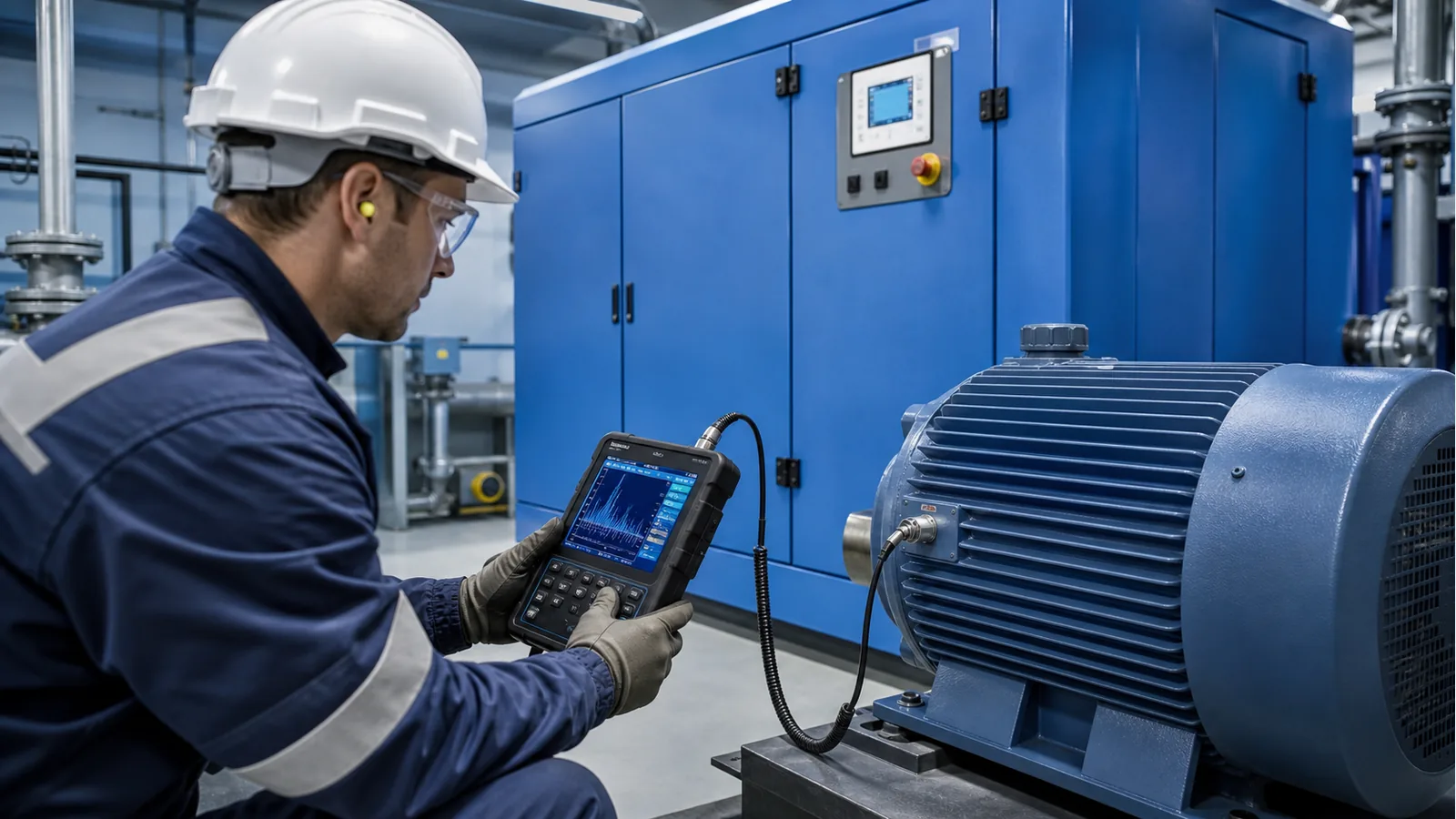
Noise and vibration may come from a loose panel or from serious bearing, coupling or air-end damage. Do not listen close to exposed rotating parts with guards open. Use controller data, vibration measurement and shutdown inspection to locate the source.
Typical Symptoms
- New metallic impact, rubbing, periodic knocking, sharp squeal or electrical hum appears.
- Machine, base or connected piping vibration increases and panels or fasteners loosen.
- Noise changes with loading, speed, pressure or cooling-fan operation.
- Bearing temperature, current fluctuation, belt dust, coupling debris or lubricant leakage appears at the same time.
Diagnostic Sequence
- Record the speed, load state, pressure and temperature when the noise occurs. From a safe distance identify whether it comes from the fan, motor, drive, air end or piping.
- After shutdown and depressurization, inspect enclosure panels, doors, foundation bolts, vibration isolators and base contact.
- Check whether rigid piping transfers strain into the package, flexible connectors are damaged, or pipe clamps and supports are loose.
- Inspect fan blades for deformation, dirt imbalance and contact with the shroud; check fan bearings and fasteners.
- On belt drives check tension, alignment and wear; on direct drives inspect coupling element condition, clearance and alignment.
- Check motor and air-end bearing temperature, lubrication and vibration spectrum. Do not dismantle the air end without appropriate training.
- Inspect inlet, minimum-pressure and blowdown valves for abnormal whistling and eliminate leaks or pressure pulsation.
Corrective Actions
- Torque enclosure, base and pipe supports correctly and replace damaged isolators and flexible connectors.
- Clean, correct or replace an unbalanced fan and restore safe clearances.
- Adjust or replace belts and couplings and have alignment completed with appropriate instruments.
- If bearing or air-end vibration exceeds limits, perform condition analysis and planned repair; do not hide an internal fault with softer mounting pads.
Stop the Compressor and Call a Qualified Technician When
- Strong metallic impact or rubbing appears suddenly, or air-end rotation becomes irregular.
- Vibration rises rapidly together with bearing temperature, abnormal current or lubricant leakage.
- A fan, coupling or belt guard is damaged and rotating parts may detach.
Prevention
- Retain baseline vibration, temperature and sound data from commissioning and normal operation.
- Inspect foundations, isolators, flexible connectors, belts and couplings periodically.
- Keep fan blades and motor-cooling surfaces clean to prevent imbalance.
- Use scheduled vibration monitoring and bearing trending on critical machines.
Important Note
Descriptions of sound are subjective. Remote diagnosis should include alarm history, operating condition, video or audio and vibration data. Sound alone cannot justify replacing an air end or bearing.