Air Compressor Oil Carryover or High Oil Consumption: Causes and Fixes
Common causes of screw-compressor oil carryover include overfilling, a blocked scavenge line, damaged or incorrectly sealed separator, low internal pressure, high temperature, a minimum-pressure-valve fault or foaming lubricant. First determine where the lubricant is being lost.
· BOSAN
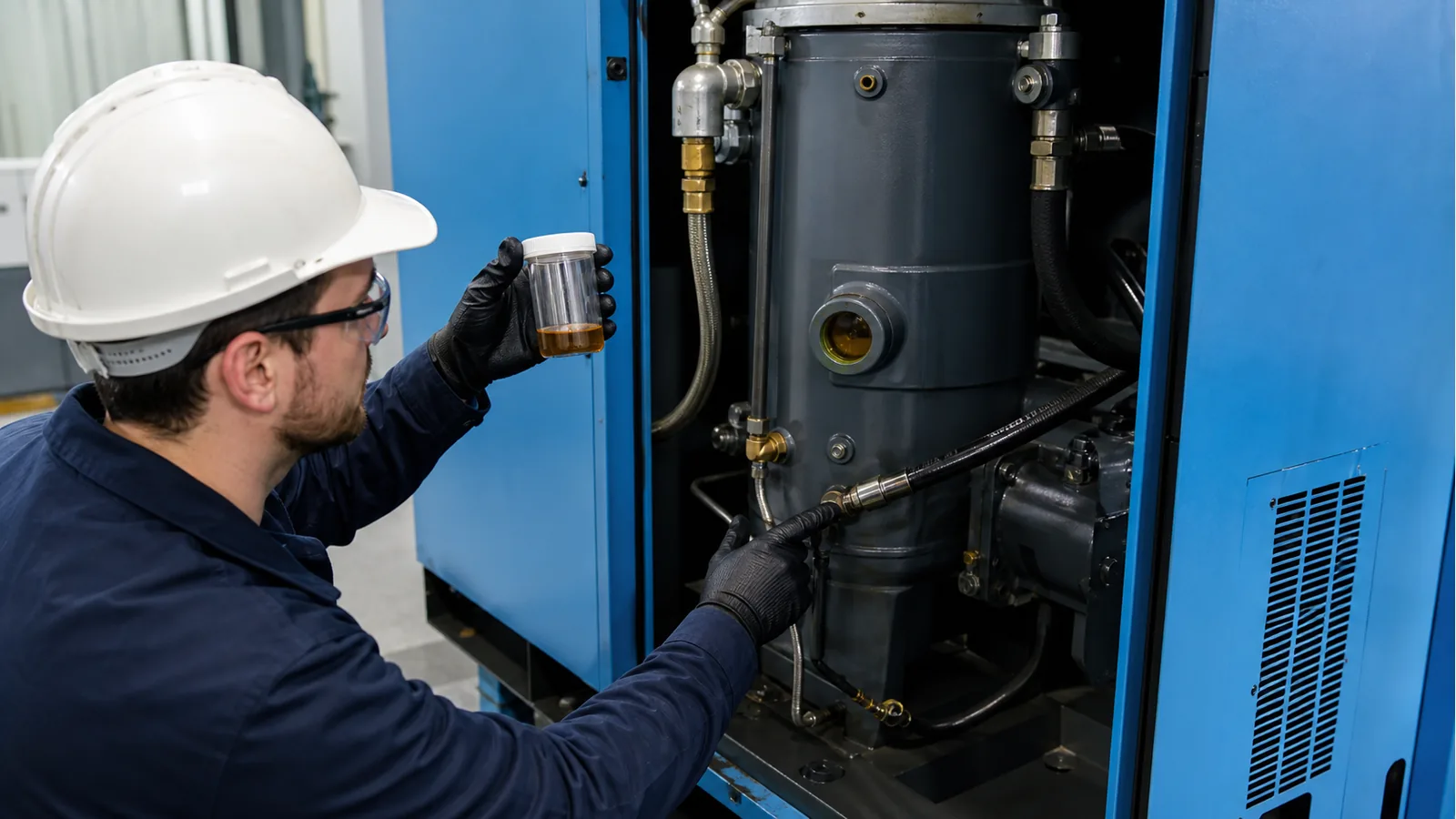
Oil carryover may appear as rapidly saturated line filters, increased oil in condensate or a steadily falling lubricant level. Separate external leakage, normal trace aerosol, separator-system failure and saturated downstream filtration instead of repeatedly topping up the sump.
Typical Symptoms
- The lubricant level falls significantly over a short operating period without a large visible external leak.
- A clear oil film appears in receiver, dryer or point-of-use condensate and line filters saturate quickly.
- Separator differential pressure is abnormal, no oil return is visible, or oil mist is discharged during unloading.
- The unit operates for long periods at low pressure or high temperature, lubricant foams, or incompatible fluids have been mixed.
Diagnostic Sequence
- Read the lubricant level in the exact running or stopped condition specified by the manual to eliminate incorrect observation and overfilling.
- Inspect lubricant lines, cooler, filter, separator vessel, shaft seal and fittings for external leakage. Clean suspected areas and recheck.
- Record separator differential pressure, internal pressure and discharge temperature. Low pressure and high temperature both impair separation.
- After isolation and depressurization, inspect the scavenge line, restriction orifice, check valve and sight glass for blockage, damage or incorrect insertion position.
- Inspect the separator element for rupture, collapse or excessive service life and check for incorrect flange seals or bypass paths. Use the correct gasket and grounding arrangement during replacement.
- Confirm that the minimum-pressure valve establishes the specified internal pressure and that inlet/unload control is not causing prolonged abnormal low-pressure operation.
- Verify lubricant type and service records and check for mixing, foaming, emulsification or oxidation. Then inspect saturated downstream coalescing filters and failed automatic drains.
Corrective Actions
- Correct the level under the specified condition, repair external leaks and record makeup quantity per operating hour.
- Clean or replace scavenge components and install the model-correct separator element and seals correctly.
- Service the minimum-pressure valve and load/unload control to restore normal internal pressure and temperature.
- For incompatible, heavily foaming or oxidized lubricant, follow the manufacturer's fluid and filter replacement procedure and clean the circuit if required; replace saturated downstream filters.
Stop the Compressor and Call a Qualified Technician When
- Lubricant level falls rapidly, a large quantity of oil is discharged, or separator differential pressure exceeds its limit.
- The separator vessel must be opened, the separator has ruptured or the safety valve operates.
- Oil reaches a food, pharmaceutical, electronics, coating or other air-quality-sensitive process.
Prevention
- Use the specified fluid and trend makeup quantity, separator differential pressure and scavenge operation.
- Avoid operation below the model's required internal pressure.
- Service the separator, scavenge line and minimum-pressure valve according to actual conditions.
- Shorten lubricant and coalescing-filter inspections in hot and humid environments.
Important Note
Compressed air from an oil-injected screw compressor must not be treated as oil-free air. Food, pharmaceutical, electronics and similar processes require a system designed and tested to the applicable ISO 8573-1 air-purity class.